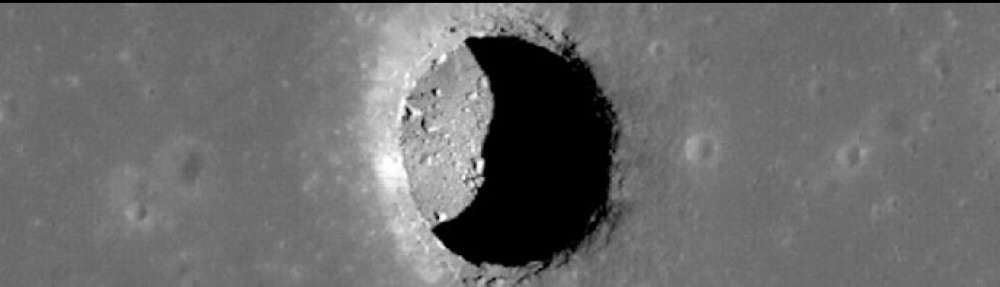
Before we can explore the Tranquility Hole, we have to get there safely and land close to the hole. How close? Within 50 meters I suspect. We want to be close enough that we don’t have to carry a large amount of fiber-optic cable (bulk = weight = cost), but not so close that we run the risk of landing inside the hole or being at an angle where we can’t deploy the solar array or comms systems.
This will require precision positioning, guidance and navigation. The lander won’t have enough propellant for a second pass. Use of the LRO images should allow for an accuracy of 10 m or less.
The lander will also carry a deployable solar array, the main communications equipment (transmitter/receiver and high gain antenna) as well as the main computer and the Roller. The Roller will need a fiber-optic data link that will feed out from a reel in the lander, unwinding as the Roller moves towards and over the edge of the opening. That cable has to be strong enough (under Lunar gravity) to be able to lift the Roller back up to the surface. If it can do that under Earth gravity, the Lunar gravity will be no problem.
Power from the solar array will be provided to the Roller while it’s in shadow or exploring beyond the sunlit area at the bottom of the hole, and data from the LIDAR or radar plus imaging camera(s) will go up the link to be transmitted to Earth via the high gain antenna.